The London Borough of Islington is often spoken of as a single place, yet those who live here know it comprises distinct neighbourhoods, each with its own character and history. Understanding these differences matters for anyone seeking to navigate the borough, whether they are renting a flat, opening a business, or simply exploring beyond the obvious tourist routes.
Canonbury: Georgian Calm
Canonbury sits in the borough's north-eastern corner, defined by its concentration of Georgian architecture. Canonbury Square, laid out in the early nineteenth century, contains some of the finest surviving townhouses from this period. The area developed as a middle-class suburb when the New River brought clean water to the vicinity, and much of that residential character remains.
Canonbury Grove and Alwyne Road offer parallel examples of early Victorian villa development, with larger gardens than properties closer to the commercial thoroughfares. The area maintains a quieter atmosphere than neighbouring districts, with fewer through-routes and a predominance of residential streets. Canonbury station provides Overground connections, while Highbury and Islington station sits at the area's southern edge.
Highbury: Suburban Proportions
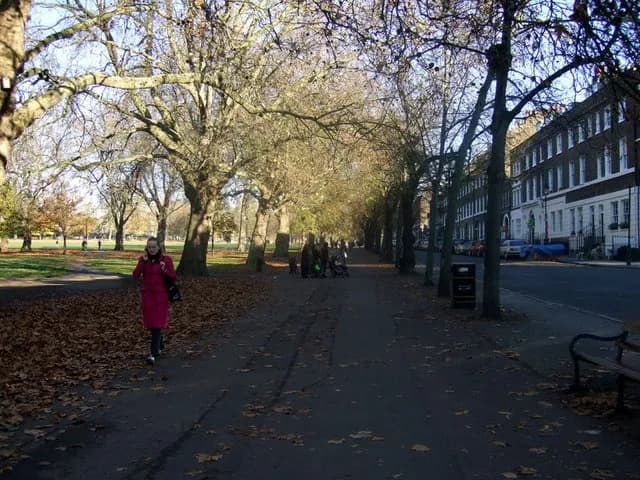
Highbury occupies the northern portion of the borough, centred on Highbury Fields. The park itself, thirty acres of open space, represents one of Islington's most significant green assets. The surrounding terraces, particularly those on Highbury Place completed in 1777, demonstrate the area's development as a desirable residential district in the late Georgian period.
Highbury's development accelerated with the arrival of the railway, and the architectural mix reflects this timeline. Streets such as Aberdeen Lane and Baalbec Road contain well-preserved examples of Victorian artisan housing, while the area around Highbury Corner includes more substantial Victorian villas. The former Arsenal Stadium site, now residential, anchors the area's eastern boundary.
Angel and Upper Street: The Commercial Spine
Angel forms Islington's commercial heart, centred on the junction where Upper Street meets Islington High Street and Pentonville Road. Upper Street itself runs for approximately one mile from Angel to Highbury Corner, making it one of London's longest continuous high streets. This concentration of frontage has supported a diverse retail and hospitality economy for generations.
The area around Essex Road and the southern end of Upper Street contains a higher proportion of independent businesses than many comparable London centres. Camden Passage, a pedestrianised lane running parallel to Upper Street, operates as an antiques market on certain days while maintaining permanent retail premises throughout the week. The passage connects Upper Street to Islington High Street, providing a pedestrian route that bypasses the main traffic flows.
Barnsbury: Terraces and Squares
Barnsbury lies between Upper Street and the Caledonian Road, comprising a grid of residential streets developed primarily in the mid-nineteenth century. The area is distinguished by its concentration of garden squares, including Barnsbury Square, Thornhill Square, and Wellington Square. These green spaces, most originally private, now provide public access and define the neighbourhood's character.
The housing stock in Barnsbury consists mainly of three- and four-storey Victorian terraces, many converted into flats during the twentieth century. Caledonian Road provides the area's main commercial strip, with a mix of independent shops and services that contrasts with the chains dominating Upper Street. The proximity of Caledonian Road and Barnsbury stations offers transport options distinct from the Angel hub.
Finsbury and Finsbury Park: The Eastern Edge
Finsbury occupies the eastern portion of the borough, bordering Hackney. The area around Finsbury Park itself, which lies partially within Islington's boundaries, serves as a significant recreational resource. The park's ninety acres include sports facilities, a boating lake, and extensive tree cover.
The Seven Sisters Road and Blackstock Road corridors provide the area's commercial infrastructure, with a concentration of restaurants and shops reflecting the neighbourhood's diverse population. The area around Arsenal station and the Emirates Stadium experiences significant match-day footfall, while the side streets maintain a predominantly residential character. Stroud Green Road marks the boundary with Haringey, with the junction at Finsbury Park station serving as a transport interchange for Underground, Overground, and National Rail services.
King's Cross and Caledonian Road: Southern Transitions
The southern edge of Islington includes portions of King's Cross, though much of the redevelopment of the former railway lands falls within the boundaries of neighbouring Camden. Within Islington proper, the Caledonian Road corridor extends from King's Cross northward, changing character as it progresses.
The southern section, near Pentonville Road, contains a mix of residential and light industrial uses, with several estates dating from the mid-twentieth century. Further north, around Caledonian Road station, the street becomes more residential, with Victorian terraces similar to those in Barnsbury. The area around Bingfield Park and the New River Walk offers pockets of green space distinct from the larger parks elsewhere in the borough.
Practical Considerations
Each neighbourhood within Islington presents different considerations for residents. Parking restrictions vary by controlled parking zone, with permits required for most on-street parking. Council tax bands reflect the property values of each area, with Canonbury and Highbury commanding higher valuations than parts of Finsbury or Caledonian Road. School catchment areas operate at a granular level, with proximity to individual schools determining admission priority.
Transport access differs significantly across the borough. The Piccadilly Line serves Arsenal, Holloway Road, and Caledonian Road stations along the western edge. The Northern Line stops at Angel and King's Cross. Overground services run through Canonbury, Highbury and Islington, and Caledonian Road and Barnsbury stations. Bus routes are extensive, with Upper Street serving as a major north-south corridor.
For those considering a move within the borough, or simply seeking to understand their neighbours better, recognising these distinct identities is essential. Islington functions not as a single community but as a collection of overlapping villages, each with its own history, economy, and daily rhythms.